Lorem ipsum dolor sit amet, consectetur adipiscing elit. Donec a convallis neque. Cras vitae convallis arcu. Vestibulum ante ipsum primis in faucibus orci luctus et ultrices posuere cubilia curae; Quisque commodo ac justo faucibus porta. Nam a aliquet turpis. Nulla facilisi. Aliquam gravida scelerisque ex vel cursus. Nam varius vitae tortor sit amet bibendum. In in ligula nulla. Nam euismod ante et venenatis eleifend.
In ut cursus ligula, eu facilisis dolor. Donec a sagittis urna, in iaculis orci. Sed sem odio, semper nec sem vitae, tristique vestibulum purus. Vivamus laoreet augue nibh, vitae accumsan nibh placerat eget. In vitae ipsum quis purus pharetra tincidunt. Sed sit amet interdum odio, et consequat felis. In orci lacus, finibus a lacinia sed, semper id lacus. Morbi cursus urna id tellus lacinia scelerisque.
In ut cursus ligula, eu facilisis dolor. Donec a sagittis urna, in iaculis orci. Sed sem odio, semper nec sem vitae, tristique vestibulum purus. Vivamus laoreet augue nibh, vitae accumsan nibh placerat eget. In vitae ipsum quis purus pharetra tincidunt. Sed sit amet interdum odio, et consequat felis. In orci lacus, finibus a lacinia sed, semper id lacus. Morbi cursus urna id tellus lacinia scelerisque.
Vice Dean Research & Knowledge Transfer, Scientific Director MBAs programmes, SKEMA Business School.
THE question
Is identity an icon—or a yogurt?
It’s probably not the question you expected to ask yourself today. And yet, you might be tempted to dig in with your spoon. Travel feeds the soul, after all.
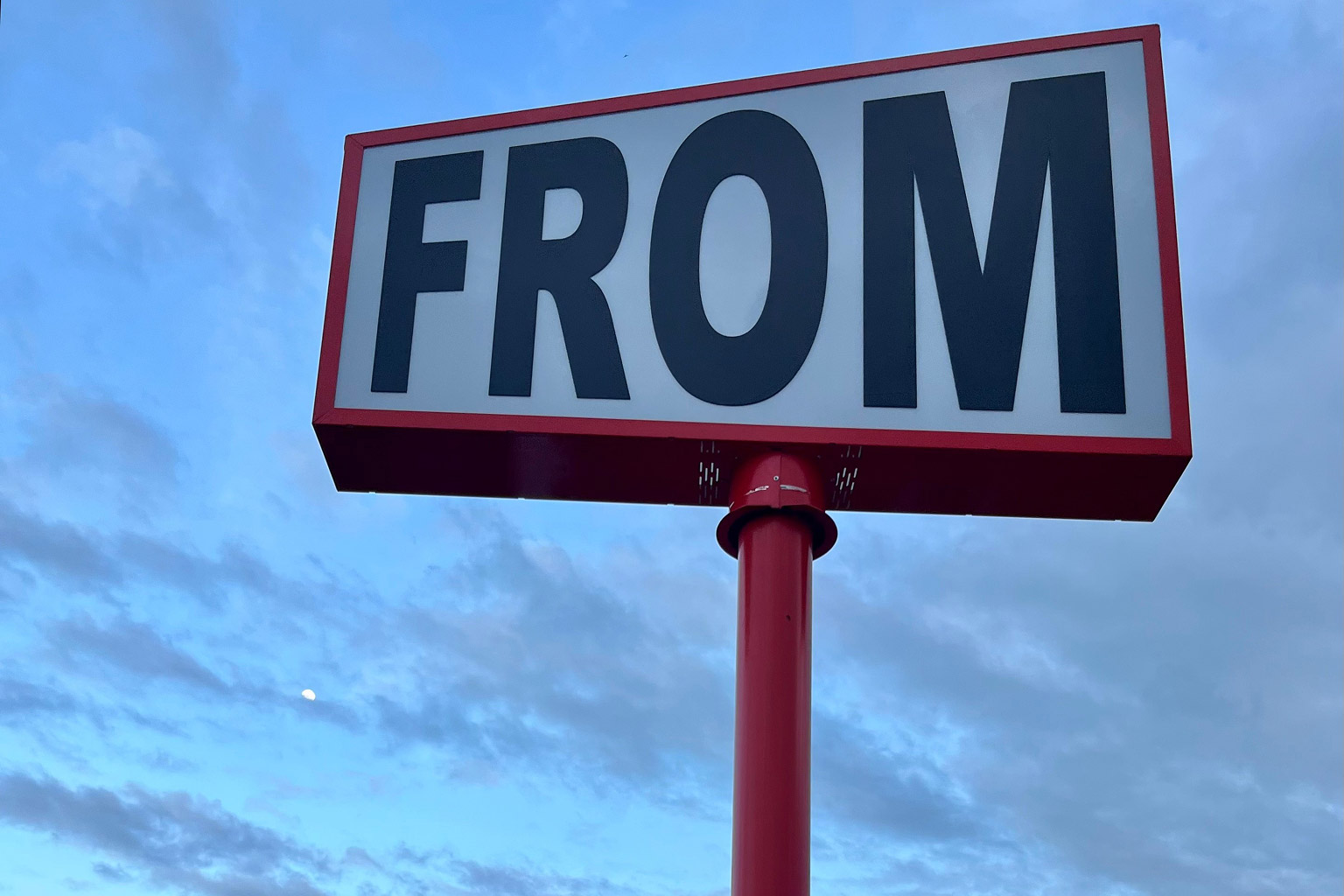
From here, you can see the rotating led sign, shifting between “From” and “Form.” From here, above the rooftops of Sofia—the capital of Bulgaria—you can also get a sense of the city’s many identities. The red-brick base of Saint George’s Church is a reminiscence of its Byzantine roots. The minaret of the Banya Bashi Mosque recalls the Ottoman chapter. The grand Alexander Nevsky Cathedral honors the liberators of Bulgaria. From the dome of the former Communist Party headquarters, you feel the legacy of five decades of communism. The half-finished skyscraper—“a corruption scandal,” we’re told—captures the tale of the post-Soviet transition. And up here, on a rooftop that overlooks it all, every era seems to be meeting the next one in fragile reconciliation.
Beneath our feet: a sleek duplex. A few floors below: contemporary art that pulses with the energy of the city’s creative class. And just below that: a restaurant that “reinvents” traditional Bulgarian cuisine with a fine-dining twist. Everything here raises the same question about identity. Or rather, of identities, political and cultural, shaped by history, always in motion, expressive, exuberant. Even the rusted steel façade of the building—Komat—has something to say: “We wanted to keep the industrial look, so we wouldn’t stand out too much,” our host explains. “We’re in the most cosmopolitan part of the city, you know?”
Here’s the question: should we think of identities as icons—sacred, immutable, fixed in time—or more like yogurt, one of Bulgaria’s national symbols, created through fermentation—through transformation?
Transformation was the very theme at the heart of the first SKEMA Business School’s Global Executive MBA (GEMBA) “Get Together” event, held in Sofia from May 7th to May 12th. It brought together 35 alumni and participants from over 20 nationalities and just as many cultures. Beneath the golden chandelier and wooden ceiling of the Vivacom Art Hall, they met, discovered, and reintroduced each other’s over the course of this two days’ workshop. All of them were chasing their own identity—to progress both professionally and personally.
Giving the yogurt a container
Identity often emerges in contact with others, through a shared language that forms over the course of their journey. It ultimately expresses itself in what SKEMA calls their Unique Social Contribution (USC): the one thing that fundamentally qualifies them to act in the world. This gathering in Sofia brought those identities into contact, allowing new potential to surface from their convergence.
Hosting this event in Sofia echoed philosopher Charles Taylor’s vision, who argued that modern identity is not ahistorical—but is rather shaped by history. More than we often admit, it’s grounded in inherited ideals and taboos—icons, in a way—passed down from the great philosophical movements that influence how we view the world. The challenge of modern life is actually to compose our own narrative. To allow ourselves to ferment. To reconcile two deep yearnings: to belong to a shared community, and to be recognized for our individuality and inherent dignity. To tie belonging and singularity together—inscribing one within the other—is a form of what sociologist Zygmunt Bauman called “being engaged with the world.” A way to rebel against the “liquid society”, in which relationships, identities, careers, and commitments are increasingly fragile and fleeting—like a liquid, or a yogurt, that can’t keep the same shape for long.
To discover identity is to give life a sense of direction through the stories we tell ourselves. It’s giving the yogurt a container and allowing your freedom to take shape within a frame. Identities are not just icons or yogurts. They are both. They are living matter, and we must hold onto them before they take hold of us.
That’s what GEMBA participants are invited to do. And that is what I invite you to do as well.